What the thing you found is telling you
People rarely call us because they saw a rodent in full daylight. They call because of a sign. A smear along a joist, a chewed corner on a bag of birdseed, a rustle in the wall by the bathroom fan. Each one narrows down which animal it is and roughly where it lives, and that decides where we start.
- Droppings the size of a grain of rice, pointed at the ends, in silverware drawers, under the sink or along the back of a pantry shelf. That is almost always the house mouse. Our mouse work starts here.
- Droppings closer to the size of a raisin or an olive pit, with blunt ends, near a floor drain, the garbage cans or the bottom of the basement stairs. That points to Norway rats, and to rat control.
- Thumping or running overhead at night, plus shredded insulation pulled into piles. Something is living in the attic or the upper wall cavities, and an attic cleanup will likely follow once they are gone.
- Fresh holes in the dirt along the foundation, about the width of a tennis ball, with packed runways leading away from them. Rats are digging under the house or the garage slab.
- No clear sign, just a feeling and a smell. That is the case for a proper rodent inspection before anyone sets a single trap.
Why Grand Rapids houses let them in
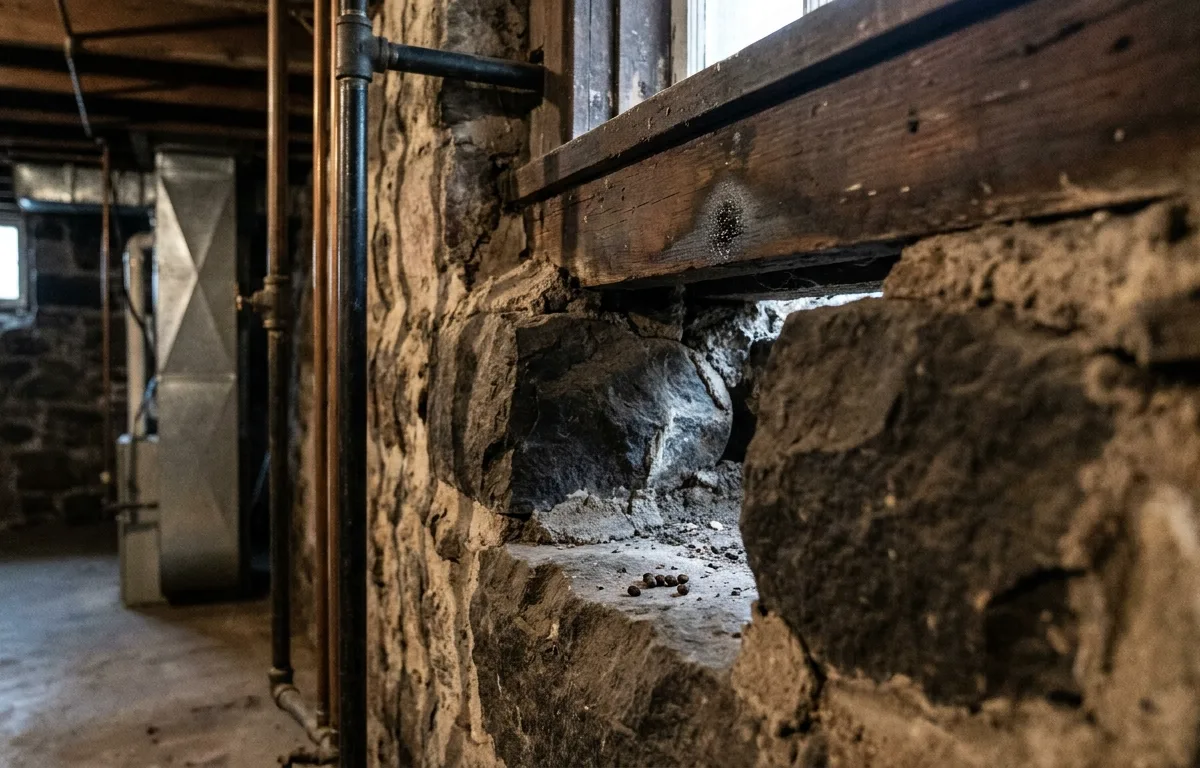
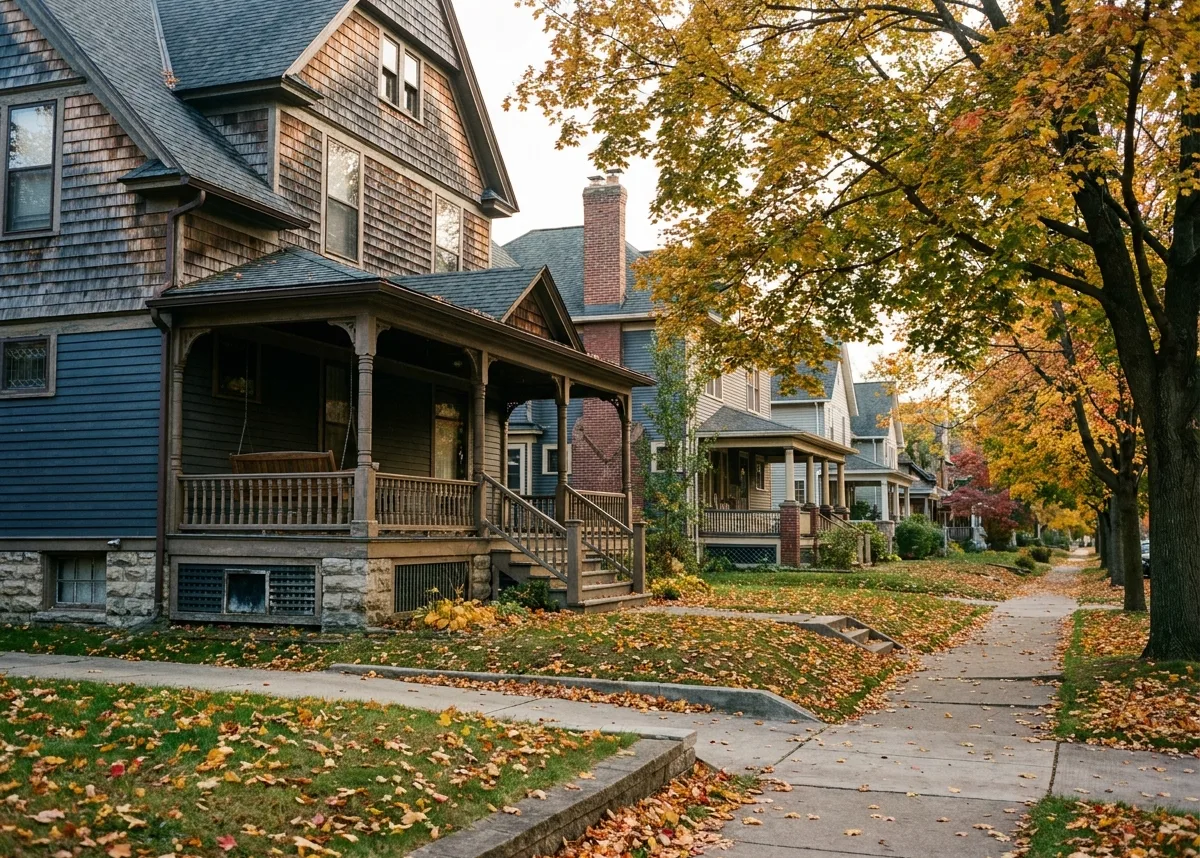
A lot of this city was built when the furniture factories were running full tilt, and the houses from that era are handsome, sturdy and full of gaps. Nobody was thinking about a mouse that can squeeze through an opening the width of a pencil when they laid a fieldstone wall in 1905.
The classic Michigan basement is the first place we look. It is often a stone or rubble foundation with crumbling mortar, a dirt or patched floor in one corner, and a sill plate that rests on uneven stone. Every gap between stone and wood is a doorway. Block foundations from later decades have their own weak spots, mainly the hollow cores on the top course and the spots where utilities were punched through.
Above the basement, many older homes are balloon framed, meaning the wall studs run in one long piece from the sill to the roof line with no fire blocking between floors. A mouse that gets into the wall cavity at the basement can climb straight to the attic without ever showing itself in a room. That is why people hear scratching on the second floor and swear there is nothing downstairs.
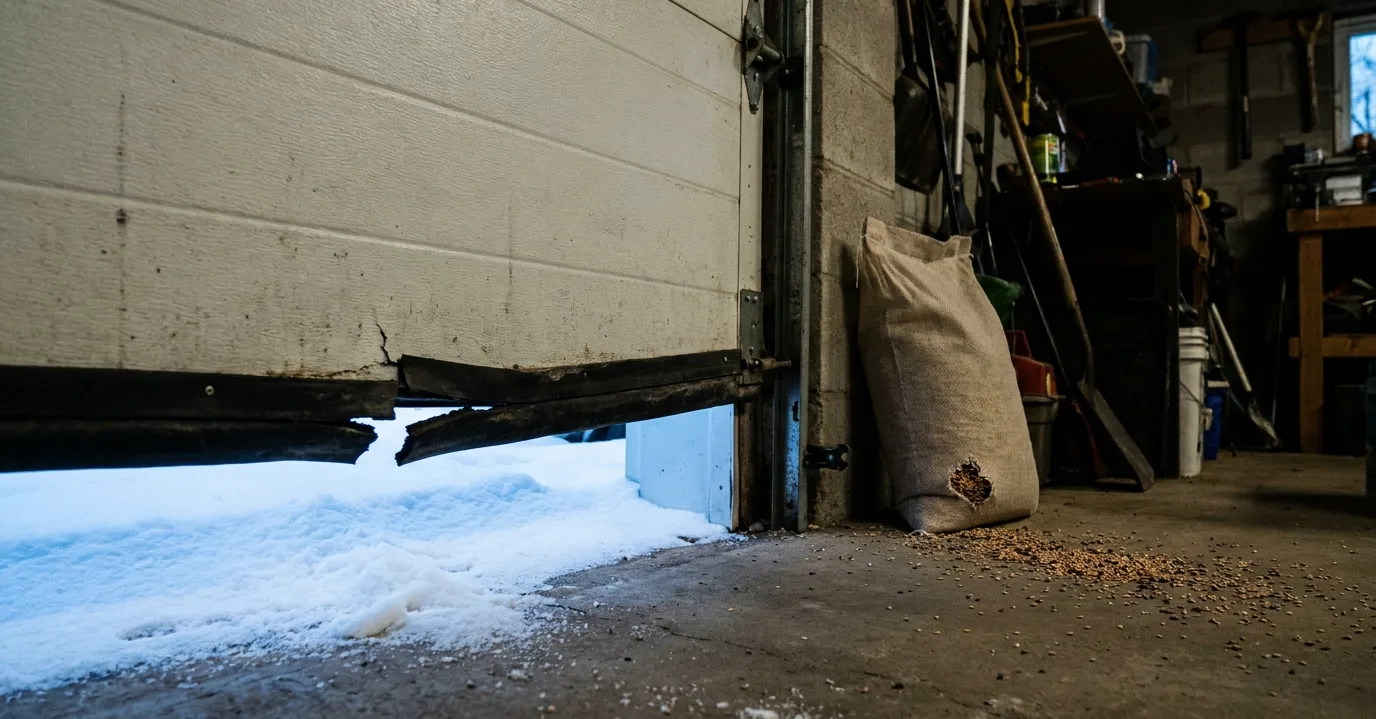
Then there are the attached and tuck-under garages added on mid-century houses on the southeast side. Garage doors that no longer seal at the bottom, a shared wall with the kitchen, and a bag of grass seed on the floor. That combination feeds and shelters mice through the whole winter.
Norway rats and house mice, and how they differ
Two animals account for nearly every indoor call we get in this city, and they behave so differently that one plan rarely fits both.
The Norway rat
Heavy, brown-gray, with a tail shorter than its body. Norway rats prefer to live at ground level or below. They dig burrows under decks, sheds, concrete stoops and garage slabs, and they come into basements through foundation cracks, broken drain lines and gaps around sewer pipes. They are suspicious of anything new in their path, so traps often sit untouched for a few nights before they work. Compost piles, bird feeders and alley dumpsters keep them well fed.
The house mouse
Small, gray-brown, big ears, curious by nature. House mice nest inside the structure itself: wall cavities, the space under a dishwasher, the boxes stacked in a basement storage room. They can turn up on any floor of the house and they breed fast once they have warmth and a food source. Unlike rats, they will investigate a new trap the first night.
Deer mice and white-footed mice
These native mice have white bellies and bicolored tails. They are mostly found in detached garages, sheds, campers and up-north cabins that sit closed for months. They move in with the cold, nest in stored cushions and boxes, and leave a real mess behind. Their droppings deserve careful handling, so we treat cleanup in those spaces with extra caution.
Voles and chipmunks also show up in Grand Rapids yards, but they tunnel in lawns and garden beds and rarely live indoors. We focus our work on the rats and mice that actually get into the house.
The rodent calendar in West Michigan
Our phone follows the weather. The first cold snap of October is the starting gun. Field and yard mice that spent summer outdoors start looking for warm air leaking from a foundation, and by Halloween a lot of households have found their first droppings.
Winter keeps them in. Lake-effect snow piles against foundations and buries the usual outdoor food, so the mice that got in settle down and breed. Rats stay active under snow cover too, tunneling along the base of walls where the ground stays a little warmer.
Spring thaw brings its own trouble. Melting snow and rain soak the ground, burrows flood, and rats move to higher and drier spots, which sometimes means your basement. Homes near the Grand River and low-lying streets can see this more sharply. Many residents still remember how high the water got in the April 2013 flood, and rodents were pushed around the city along with everything else.
Summer is quieter indoors but busy outside. It is the ideal season for exclusion work, because mortar cures well, the ground is open, and nobody is shivering while a garage door sweep gets replaced.
How a job runs, in short
You call and describe what you are seeing. We come out and go over the house from the foundation to the attic hatch, looking for droppings, rub marks, chewed wood and the gaps that connect them. You get a plain explanation of what we found and what we would do about it.
Then we set traps in the places the animals are traveling, check them on a schedule, and close up the entry points with materials rodents cannot chew through. Once the activity stops, we help clean up what they left behind. The full walk-through, stage by stage, is on our how it works page.
What we do a little differently
We are a small outfit and we only do one thing. That shapes how we work.
- We do not scatter poison around your living space. A mouse that eats bait inside the walls can die there, and then you have a smell problem on top of a mouse problem.
- We seal after we trap, not before. Closing a hole while animals are still inside just shuts them in with you.
- We explain what we find. If the main problem is a garage door seal you could fix yourself in an afternoon, we will say so.
- We check our own work. Traps get looked at again, and sealed spots get looked at again, until the signs stop.
- We take the building seriously. Old plaster, original trim and fieldstone are worth protecting, so we choose methods that do not tear a house apart to catch a mouse.
The services we offer
Every job is built from a few pieces. Some houses need only one of them, most need several. Here is what each covers.
- Rat Control
Norway rats burrow under garage slabs, woodpiles and decks, then work into basements from below. We find the burrows and the opening, trap along their runs, and close the hole with metal and mortar once they are gone.
- Mice Exterminator
When October nights turn cold, mice squeeze in through pencil-width gaps and climb inside old wall cavities to the attic. We set covered traps on their routes, come back to check them, and seal the way in.
- Rodent Inspection
A slow walk from foundation to roof: fieldstone mortar, sill plates, dryer vents, the garage door seal and the attic eaves. You get a list of every opening we find and a plan for what to do next.
- Rodent Trapping & Removal
Snap traps in covered stations, placed tight to the walls where rodents actually run and checked on a schedule. No loose poison inside your home, so nothing ends up dying where you cannot reach it.
- Rodent Exclusion & Sealing
Copper mesh, hardware cloth, masonry patch and sheet metal across the gaps mice and rats use, from the rim joist to the gable vents. Built to hold up through years of frost heave and Michigan weather.
- Attic Rodent Cleanup
Soiled insulation and droppings removed using the wet method and HEPA gear, framing disinfected, and new insulation blown in. If we spot old vermiculite, we stop and ask you to have it tested before any work goes ahead.
- Commercial Rodent Control
Programs for restaurants, breweries, food warehouses and apartment buildings, with numbered stations, a site map and an on-site logbook that is kept current. Visits are timed around your opening hours, kitchen prep and the loading schedule at the dock.
Neighborhoods we cover
We work inside the City of Grand Rapids, from the old mansions on the hill above downtown to the postwar blocks out by the southeast edge. Each neighborhood has its own housing quirks, and these pages explain what we tend to find in each one.
- Heritage Hill, Grand Rapids
Historic homes with stone foundations, carriage houses and deep attics. We trace mice through balloon-framed walls and seal gaps with materials that suit the original house.
- Eastown, Grand Rapids
Close-set 1910s and 1920s houses, rentals and the five-way business district. We trap, seal shared foundations and help landlords stay well ahead of turnover season.
- East Hills, Grand Rapids
Old homes and converted flats right behind the Cherry and Wealthy restaurants. We work alleys, basements and shared walls so rats stop crossing property lines.
- Creston, Grand Rapids
North side bungalows, alley garages and blocks near the Grand River. We find rat burrows, fit garage door seals and close up basements along the Plainfield corridor.
- Belknap Lookout, Grand Rapids
Hillside cottages, retaining walls and low crawlspaces on the bluff above downtown. We check every side of a sloped lot and seal what water and frost open up.
- Garfield Park, Grand Rapids
Early twentieth-century homes beside the park's big trees and gardens. We sort mice from rats, adjust what draws them in and seal the house tight.
- Alger Heights, Grand Rapids
Cape Cods, bungalows and early ranches with attached garages and knee-wall attics. We close garage seams, crawlspaces and knee walls, the spots mice use most here.
- Ottawa Hills, Grand Rapids
1920s brick Tudors and Colonials under heavy oak canopy. We check window wells, mortar joints and roomy attics, especially during the busy fall acorn rush.
- John Ball Park, Grand Rapids
West Side worker houses on hilly ground around the park and zoo. We seal cracked uphill basement walls and addition seams that let mice in.
- Roosevelt Park, Grand Rapids
Older two-story family homes on small lots near Grandville Avenue. We trap safely around kids and pets, find alley rat burrows and seal the house.
Questions people ask before they call
Is it a rat or a mouse?
Look at the droppings. Mouse droppings are small and pointed, about the size of a grain of rice. Rat droppings are much larger, thicker and blunter. Where you find them helps too: mice turn up in cupboards and drawers on any floor, rats tend to stay near the basement, the garage and the yard.
I only saw one mouse. Do I really have a problem?
Usually more than one. Mice are rarely alone, and the one you see is often the boldest of a small group nesting nearby. It is worth finding out how it got in while the numbers are still low, because a single season of breeding changes that picture quickly.
Do you use poison in the house?
Not loose bait in the rooms where you live. We rely mainly on traps inside the home and on sealing the entry points. If bait is called for, it goes in locked stations placed outdoors or in spots that children and pets cannot reach, and we talk it through with you first.
Why do the mice keep coming back every fall?
Because the gap they used last year is still open. Trapping removes the animals, but the next batch follows the same warm air and the same scent trails. Sealing the foundation, the sill, the utility openings and the garage door is what breaks that cycle.
Which parts of Grand Rapids do you serve?
Neighborhoods inside the city limits, including Heritage Hill, Eastown, East Hills, Creston, Belknap Lookout, Garfield Park, Alger Heights, Ottawa Hills, the John Ball Park area and Roosevelt Park. If you are not sure whether your street is inside the city, call (616) 441-5601 and ask.